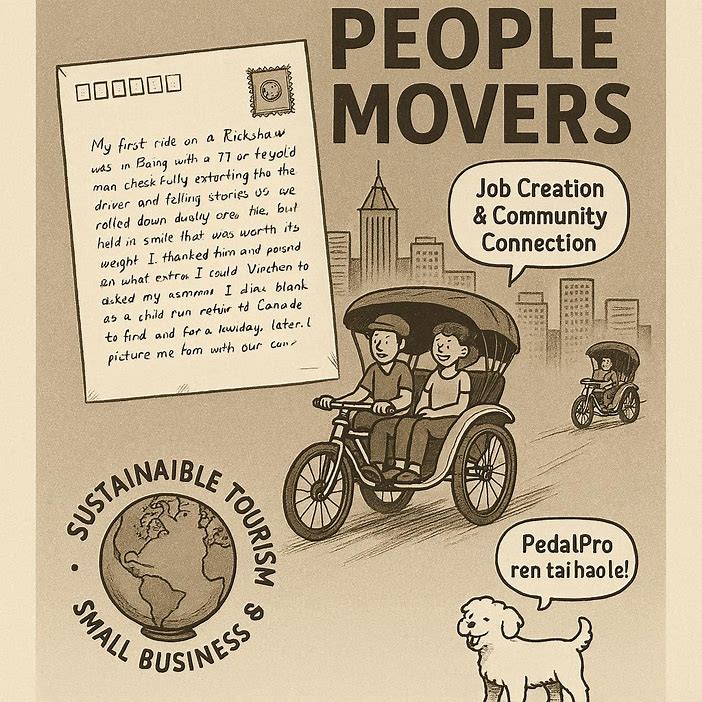
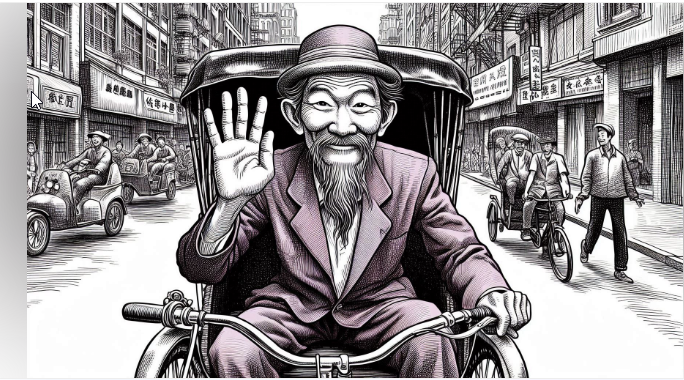
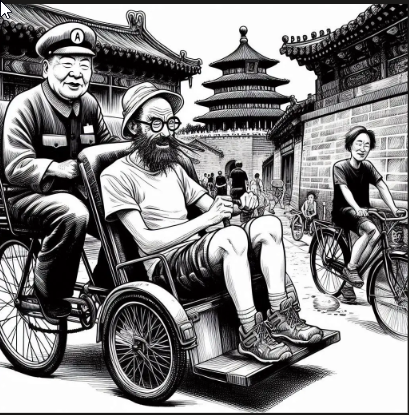
My first time in Beijing, I wandered into the hutongs and hired a small pedicab for a slow tour through the alleys. The driver was an older man, maybe in his seventies, wiry and sun-creased, pedaling with the kind of steady rhythm that comes from a lifetime of doing one thing well.
When we finished the ride, I paid the fare and added a tip. He lifted the edge of his cap, pointed to the sweat on his forehead, and smiled. Then he invited me to follow him home.
His house was tucked deep in the hutongs, filled with plants, tools, and a wall covered in postcards from travelers. His wife brought out lunch and we ate together while he told stories in Mandarin, gestures, and laughter.
Before I left, we took a photo in his back garden. Weeks later, a postcard arrived from him — the photo of the two of us, printed and mailed across the world.
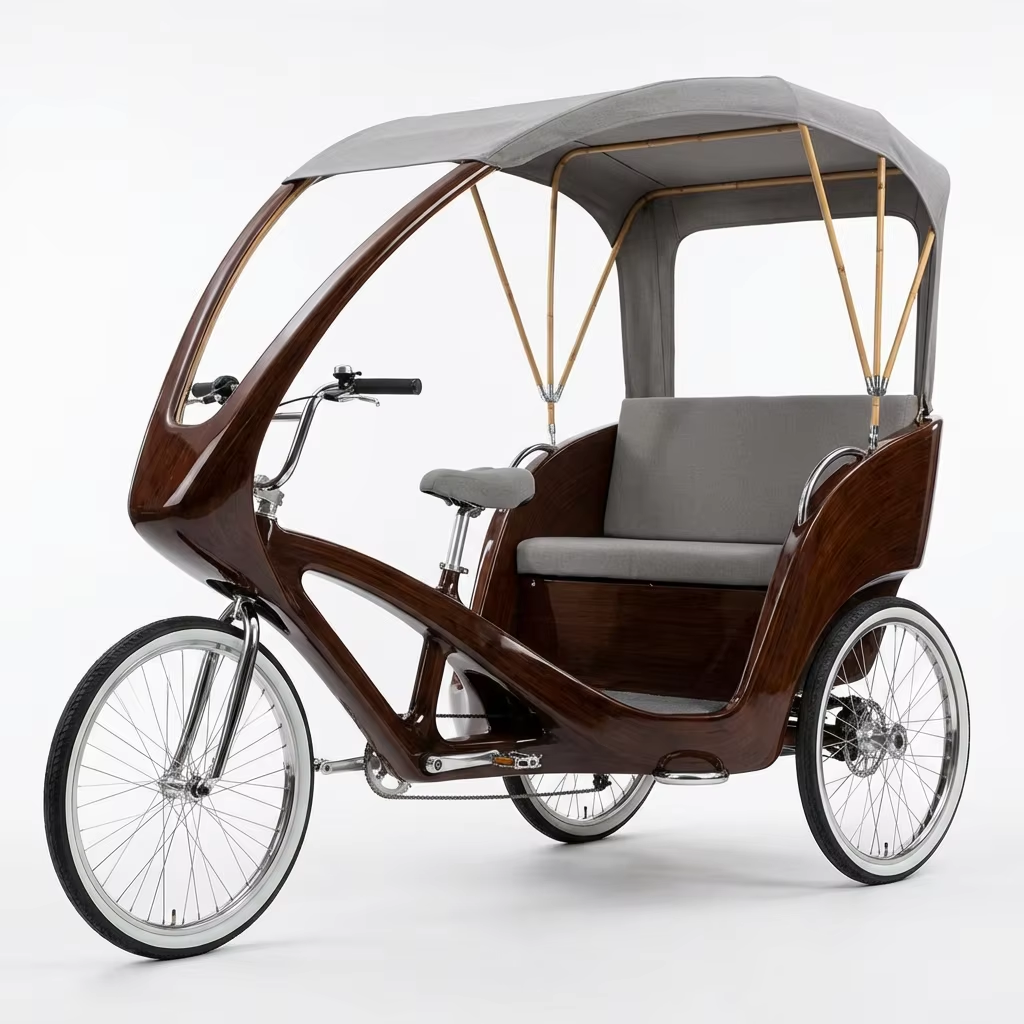
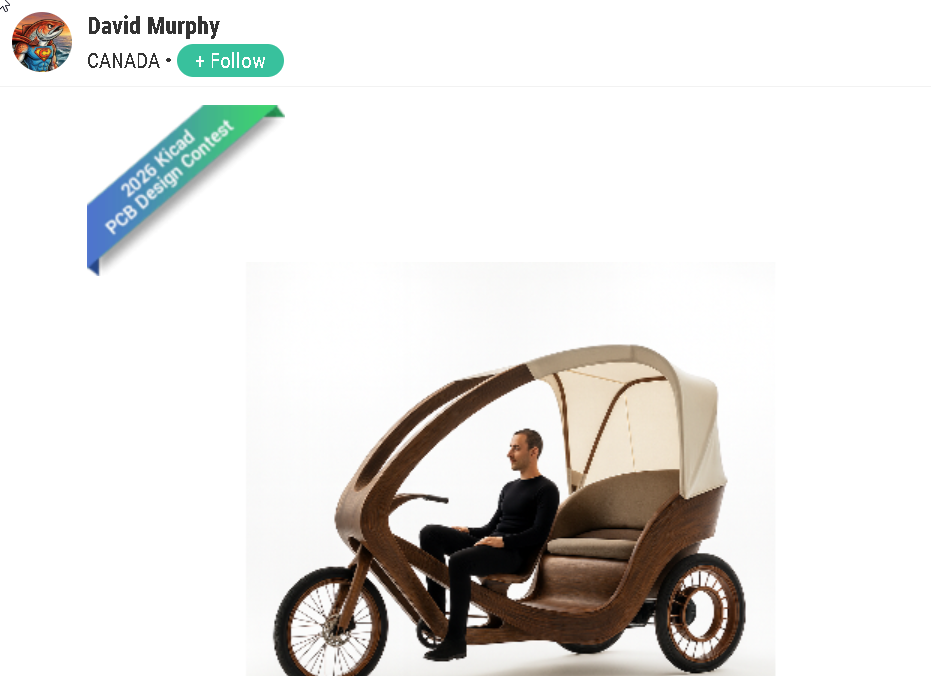
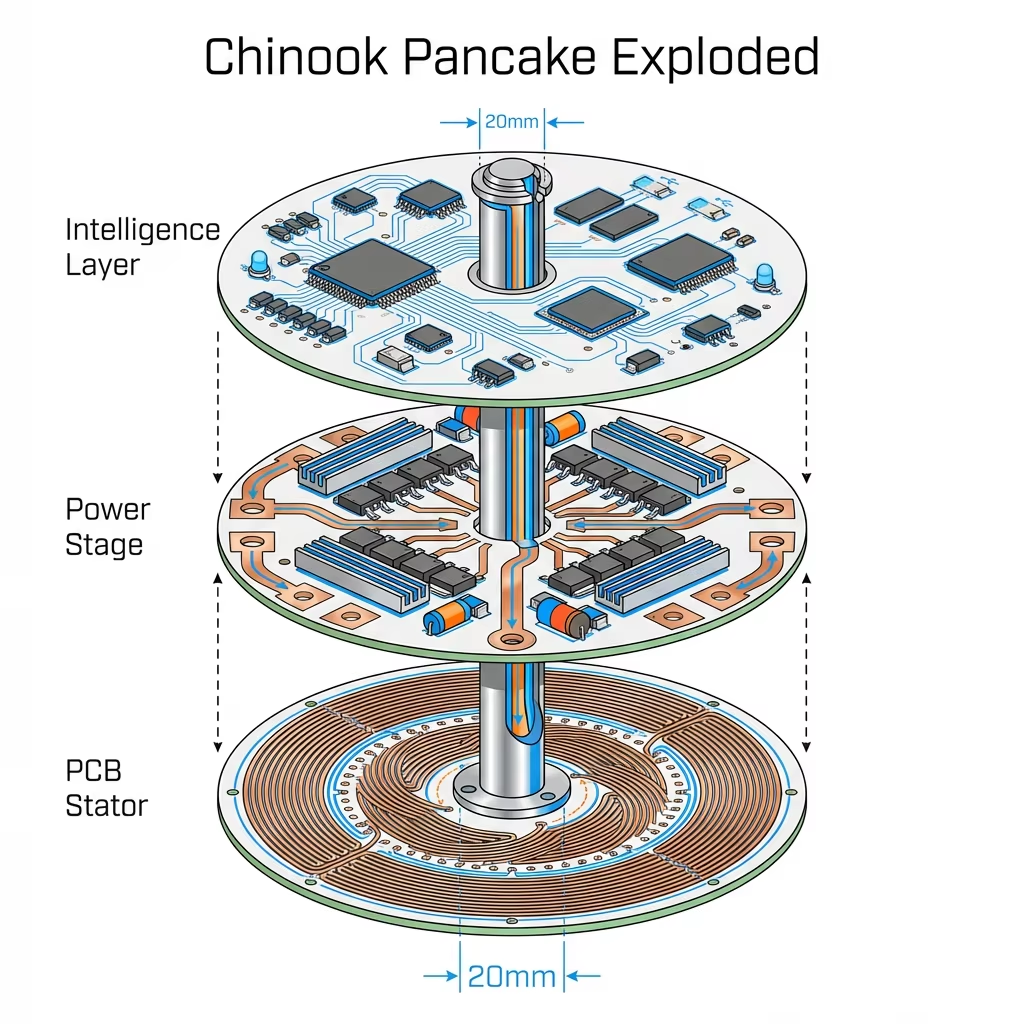
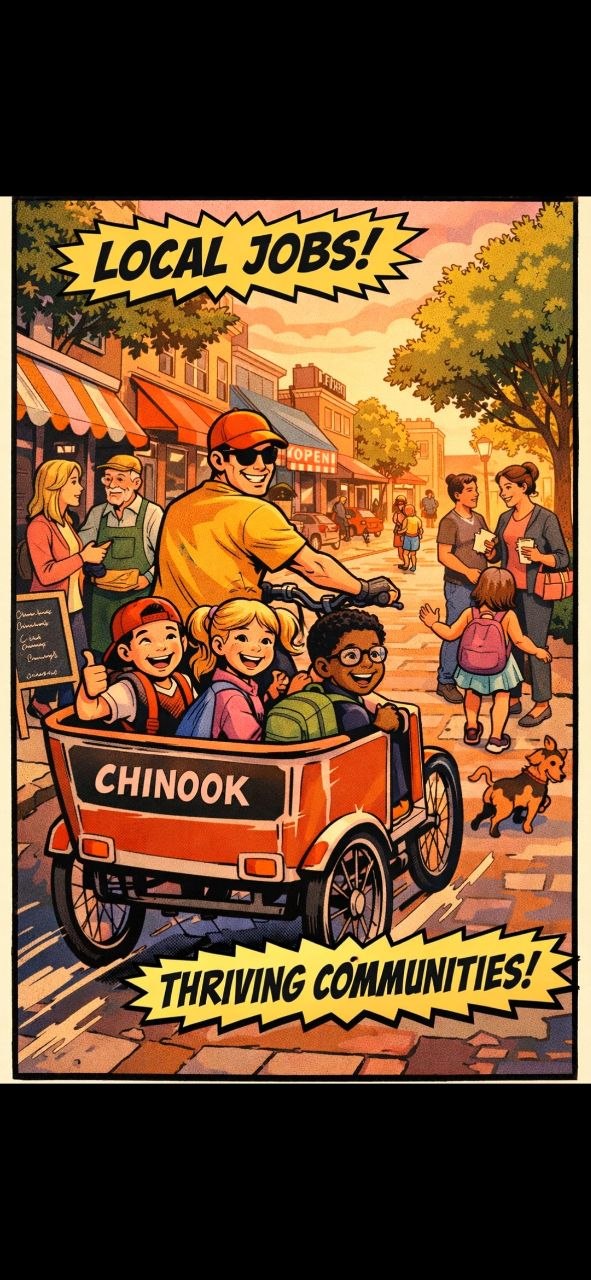
That moment is the seed of the Chinook project. A vehicle built not just to move people, but to create the kind of encounters that stay with you.
— The Chinook Project